Basic HTML Version


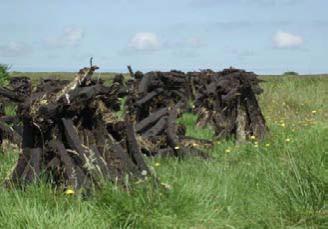
Land and Soil
89
for industrial extraction. Serious
consideration is now being given by
Bord Na Móna to the potential use of
between 50 and 80 kha of cutaway
peatlands as they leave production.
This will represent a significant
component of land cover and
land use change, and may impact
considerably on Ireland’s carbon
budget in this period.
The BOGLAND study highlights the
importance of Ireland’s peatlands,
particularly in relation to climate
change, biodiversity and water
quality. In 2011, the Department
of Arts, Heritage and the Gaeltacht
(DAHG) launched a public
consultation on the development
of a National Peatlands Strategy.
Such a strategy is urgently needed
to prevent further damage and to
ensure the sustainable management
of peatlands in terms of enhancing,
recovering and improving resilience.
Forestry
Forestry accounts for 11% of land
cover, which is low compared with a
European average of 35%. Figure 7.4
shows historic afforestation in Ireland
since 1920. Much of the forest in
Ireland is young, with nearly 40% of
total forest planted since 1990. This
is significant from a climate change
perspective, as the annual carbon
store in any afforestation since 1990
can be used to offset emissions from
other sectors, and helps Ireland
attain greenhouse gas emissions
reduction targets. The Programme
for Government 2011–2016 sets
a national planting rate target of
14,700 ha per annum, an increase
on the rate in recent years.
Approximately 75% of the national
forest estate is predominantly conifer,
composed mainly of commercial
timber species but also including
some native species such as yew and
Scots pine. Since 1997 policies have
been in place to increase broadleaf
planting, and the Rural Development
Programme 2007–2013 sets a
target of 30% annual broadleaf
afforestation. This target has been
reached (and exceeded) in recent
years, primarily through a reduction
in afforestation using coniferous
trees rather than in an increase in
planting of broadleaves.
The management of forest lands is
challenging from an environmental
perspective. The potential for adverse
disturbance of vegetation, soils
and landscape during afforestation
and forest harvesting is large.
These processes can also impact on
water quality through acidification
and nutrient mobilisation. Also of
concern are the location and scale
of forestry activities. Although
Ireland has notably less forest
than other European countries,
the rate of afforestation in Ireland
Figure 7.4
Historic Afforestation in Ireland since 1920 (Source: DAFM)
0
5,000
10,000
15,000
20,000
25,000
2020
2010
2000
1990
1980
1970
1960
1950
1940
1930
1920
1910
Total afforestation (ha per year)