Basic HTML Version


Ireland’s Environment 2012
78
Several red-listed bird species are
believed to be on the brink of
extinction as breeding birds in
Ireland, including the common
scoter, black-necked grebe, quail,
red-necked phalarope and nightjar
(Lynas et al., 2007).
Throughout Europe and in Ireland,
certain farmland breeding bird
populations suffered massive rates
of decline in the 1970s and 1980s.
There is evidence that some species
are still undergoing significant
declines (e.g. kestrel and skylark) or
have become extinct in Ireland (corn
bunting). However, it appears that
many of the more common breeding
birds in Ireland have fared quite
well in recent years (Coombes et al.,
2009). In addition, the populations
of roseate tern and buzzard have
increased significantly. The great
spotted woodpecker established
itself in Ireland in 2009 as a breeding
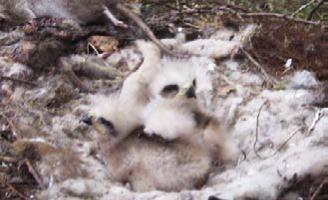
species. Reintroduced golden eagles
and red kites have bred successfully,
and white-tailed eagles are likely to
breed in the near future. A project
to save the grey partridge at its one
remaining location in Ireland has
been successful and provides useful
information to facilitate its range
expansion on Irish farmland through
targeted agri-environment measures
(Buckley et al., 2011).
Drivers and Pressures
The key pressures on Ireland’s
habitats and species are direct
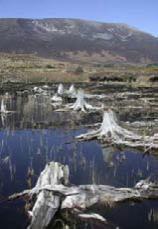
habitat damage such as peat cutting,
wetland drainage/reclamation
and infrastructural development;
overgrazing and undergrazing; water
pollution particularly from nutrients
and silt; unsustainable exploitation
such as over-fishing and peat
extraction; invasive alien species; and
recreational pressure (NPWS, 2008).
Indirect pressures such as population
growth, limited awareness about
biodiversity, and the fact that
biodiversity’s economic value is often
not reflected in decision making are
also threats to biodiversity. Climate
change is likely to bring additional
pressures on a number of species
and habitats in Ireland (EPA CCRP,
2009).
Responses
Legislation
At EU level the Habitats Directive and
Birds Directive create a comprehensive
scheme of protection for wild species
and habitats. While designation of
protected areas in recent years has
advanced substantially, the European
Commission still considers Ireland’s
list of designated Natura 2000 sites
as incomplete (EC, 2010). The full
implementation of these Directives,
along with other Directives including
the Water Framework Directive
(2000/60/EC) and the Marine
Strategy Framework Directive
(2008/56/EC), will contribute
significantly to biodiversity
protection.
The Environmental Impact Assessment
Directive (85/337/EEC) and the
Strategic Environmental Assessment
(SEA) Directive (2001/42/EC) require
the consideration of potential
development impacts on biodiversity.
The most important pieces of
national legislation on nature
conservation are the Wildlife Act,
1976, the Wildlife (Amendment)
Acts, 2000–2010, and the EU
(Natural Habitats) Regulations,
1997–2011. Under the Wildlife Acts
nearly all bird species and some 60
other animal species are afforded
protected status, as are some 90
plant species. Substantial changes
were made to the planning code in
2010, which included obligations on
local authorities to ensure protection
of Natura 2000 sites and species
listed in the Habitats and Birds
Directives.